


当前位置 : 洛杉矶时报增刊
 发布日期:2026/11/5
 来源:International daily
 打印
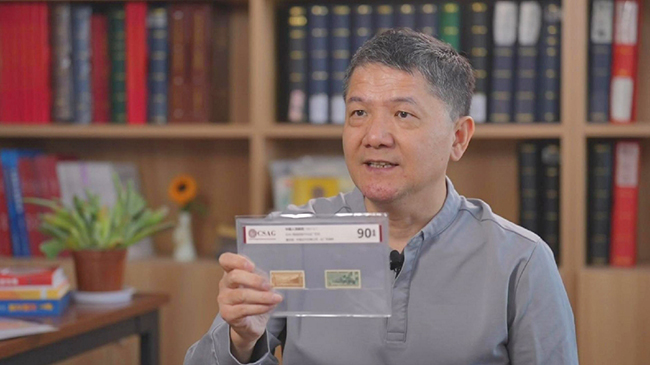
A philatelist in Beijing whose name means "National Day" in Chinese has been actively promoting China's history and culture through his stamp collection and dedicated website, hoping more people will discover the country through the images and symbols featured on stamps.
Li Guoqing, the philatelist and founder of stamp platform e1988.com, whose given name literally means "National Day" in Chinese, shared his stamp collection as the country celebrates the 77th anniversary of the founding of the People's Republic of China (PRC) on Thursday.
In an interview with China Global Television Network (CGTN), Li noted that stamps document historic events, carry cultural significance and commemorate patriotic moments.
"The first set of stamps issued by the PRC came out on Oct 8, 1949. It marked the first plenary session of the Chinese People's Political Consultative Conference. This one shows China's first domestically made car, the 'Jiefang' truck produced in Changchun City in 1957. A real milestone.
"And this one, issued in 1981, depicts the scene of 'Jia Baoyu and Lin Daiyu secretly reading 'The Romance of the Western Chamber' together.' Chinese stamps don't just feature nature like flowers, birds, fish or insects; they also tell stories from classic literature. In a way, that's how we build cultural confidence," said Li.
"This large sheet was issued on Oct 1, 1999, for the 50th anniversary of the founding of the PRC, featuring all 56 ethnic groups. It's grand and beautifully designed. Here's a small one, released for the military parade celebrating the 60th anniversary of the founding of the PRC. Also very refined in its design. And this is for the 70th anniversary, reflecting a country that is stable, prosperous and growing stronger," said Li.
"Stamps are indeed a country's calling card, a miniature encyclopedia, and a mark of the times -- all packed into such a small space. Stamps document the era, and their significance is extraordinary," said Li.
"With the rapid development of social media, traditional methods of selling, displaying and promoting stamps have become outdated. A better approach now is what we call a 'one-to-many' model, where one person promotes stamp knowledge to many. We can also sell directly to the audience. We usually have over 1,000 viewers during a livestream, and sometimes more than 2,000. From the feedback, I have seen interest from overseas customers as well. If people from other countries can come to China for a visit through these stamps—see the images —I think stamps are doing what they are meant to do: connect people. And I really look forward to that," said Li.

24小时最新动态

热点排行
图片新闻